How the way we picture death can shape our fear of mortality.
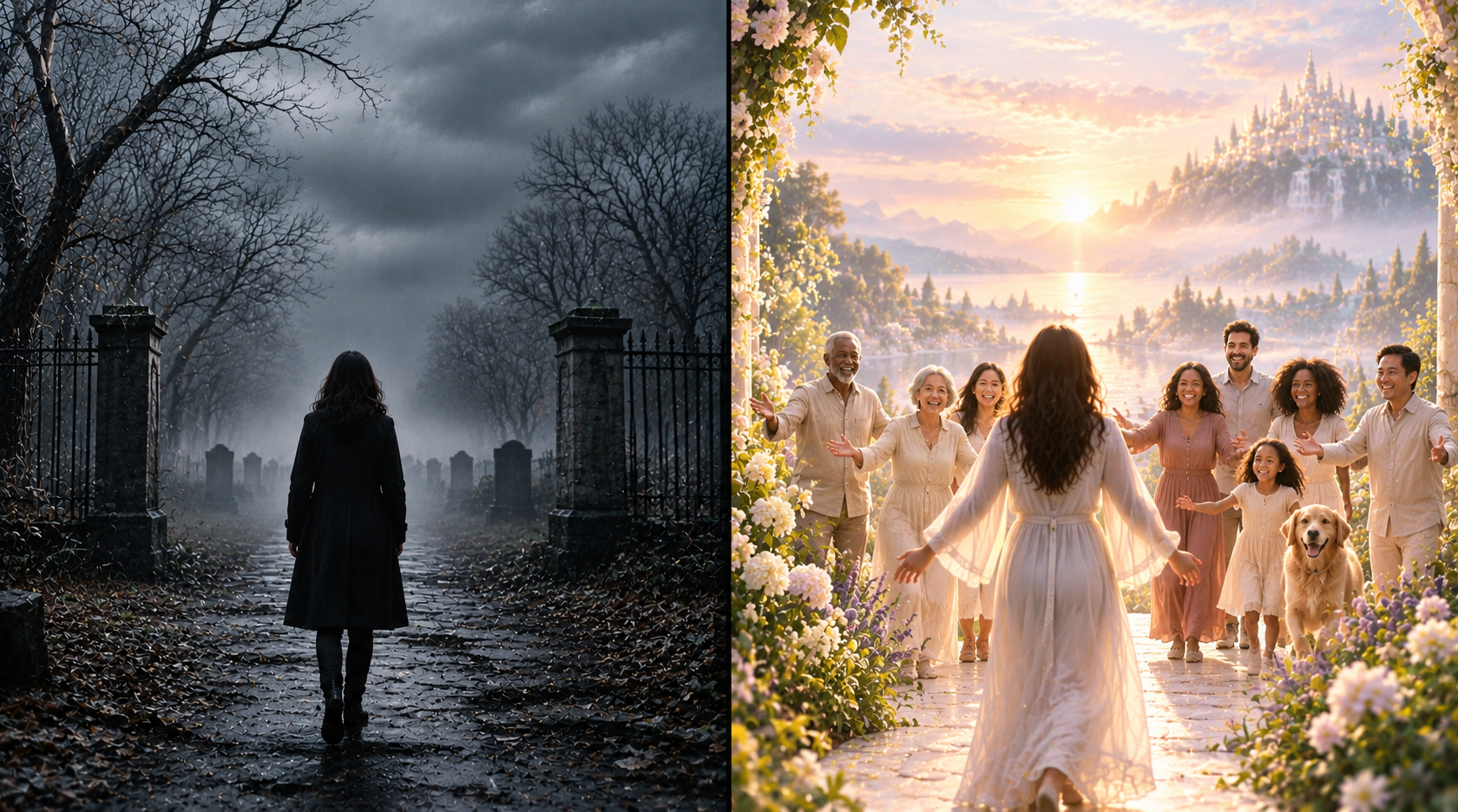
Look at these two images - which one have you seen frequently in connection with death and dying?
I’ve seen plenty of the left-side image - dark, grim, decrepit, broken. I’ve never seen the right-side image associated with death - bright, welcoming, peaceful, loving, hopeful, and alive. Alive? What are you talking about, Evelyn? Isn’t this about death? Yes, bear with me.
So, why have we been shown almost only the first image?
The cultural narrative of the West around death has been about skeletons, grim reapers (unattractive, dark, evil), horror movies, and a dark void. As we grow and develop, those repeated images and depictions are paired with emotions. What kind of emotions? They most certainly aren’t hopeful, peaceful, loving, or welcoming. Instead, they are full of fear, hopelessness, and even disgust. Eventually, we learn to equate death with terror.
But could there be more? Is there a different picture that exists?
Yes, a different picture exists for many people who have had near-death experiences (NDEs) or Life Between Lives (LBL) Regressions. NDEs happen when someone has a very close brush with death while they are unconscious, almost clinically dead, or even pronounced dead. In that state, people report vivid experiences that have similarities in various aspects. For example, many—though not all—near-death experiencers describe a profound sense of peace, overwhelming love, reunions with loved ones, and the feeling of returning “home.” LBL Regression is a deep hypnotic process that provides us with a detailed map of the spiritual realm, where we can experience that sense of “returning home”, unconditional love, forgiveness, and order.
Whether you vibe with this or not, it’s simply meant to show that there’s much more to the story than the story of death that we have inherited.
When death is perceived or believed as darkness and terror, it’d make sense to react with dread, avoidance, and persistent background fear. Our daily lives are then influenced by those reactions, which can make our lives smaller and more restricted. People with death anxiety can feel trapped in their dark images. The mind tends to fixate on the worst-case scenario and refuses to let in other versions of reality. Although fear of death is a natural part of human experience, and I don’t think that eliminating it completely is even possible, it IS possible to soften it.
If we allow for multiple possibilities to exist, the emotional space around death and the mental grip can release a bit and widen.
Nothing is permanent. Physical death is as real as physical life. So how do we live more fully when we expand our perception and understanding of mortality? Can we feel deeper gratitude toward life? Can we have stronger connections with our loved ones? Can we just notice the mundane and simple daily moments and feel more alive? Yes. Does that mean that we won’t feel discomfort around death? No. Because humans don’t love uncertainty, and in the end, it’s still uncertain how each of us will die and what happens afterward.
We are still free to choose the image that helps us connect with life more fully. The image in this post is only one of the endless other possibilities.